Rain, Grit and Glory: Settling the Great Leather Debate for British Streets
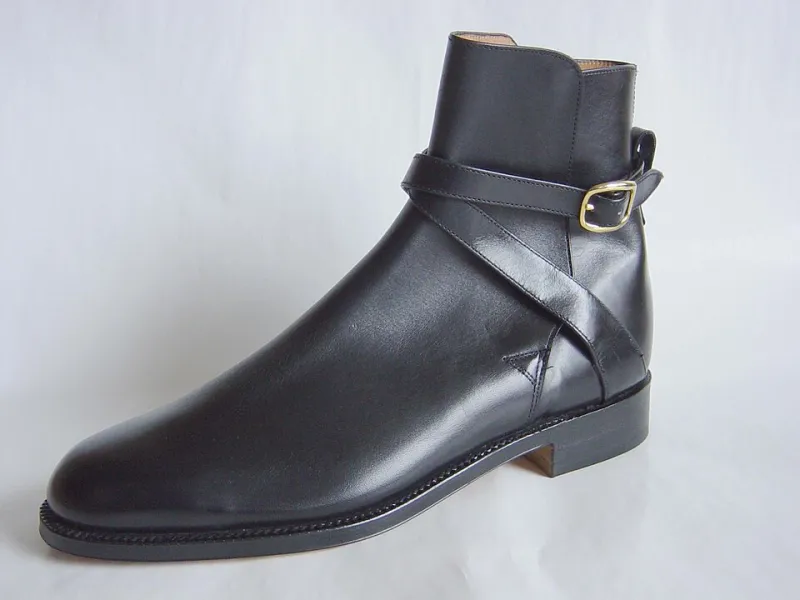
Photo: The original uploader was Cornischong at Luxembourgish Wikipedia., CC BY-SA 2.0, via Wikimedia Commons
Every autumn the same argument resumes in boot rooms from Edinburgh to Exeter: which leather actually survives a British year? It is a debate worth having honestly, because the wrong choice costs more than money — it costs wear. Below, the three great contenders are put through conditions they will actually face: Manchester drizzle, Highland frost, and the corrosive salt of a London pavement in January.
Contender One: Suede — The Beautiful Liability
Water resistance: 3/10. Upkeep: demanding. Patina: soft and characterful.
Let us be blunt first: suede and sustained rain are old enemies. A January downpour in Glasgow will leave a nap-suede boot marked, stiffened and sulking. And yet suede remains beloved, and not without reason. Its depth of colour is unmatched, it breaks in faster than almost any hide, and in dry, cold conditions — a crisp February in the Peak District — it is sublime.
The modern counterargument is the waxed or oiled suede, treated to repel water while keeping the nap. These perform respectably in drizzle but should never be trusted with a proper soaking. Verdict: a second or third pair, not a first. Wear it from April to October and it will reward you handsomely.
Contender Two: Box Calf — The Honest Champion
Water resistance: 7/10. Upkeep: moderate. Patina: superb.
If you can own only one pair of handcrafted Chelsea boots for this country, it should be box calf. Chrome-tanned, tight-grained and finished with a wax or aniline top, good calf sheds a surprising amount of weather, polishes up after a salted-pavement winter, and develops the kind of patina that makes older boots more handsome than new ones.
Its weaknesses are honest ones: creasing across the vamp is inevitable and should be worn with pride rather than fought, and scuffs will show until you learn the two-minute ritual of brush, cloth and cream. Against London salt, a weekly wipe-down and a proper wax through the toe and heel will see it through decade after decade. Verdict: the default answer. The boot that earns its place on the street.
Contender Three: Shell Cordovan — The Aristocrat with Conditions
Water resistance: 8/10. Upkeep: minimal once settled. Patina: legendary, but slow.
Shell cordovan, the dense fibrous layer beneath the hide of the rump, is the material of myth. It resists water remarkably, never creases in the ordinary way — it 'ripples' instead — and a pair polished over twenty years looks like furniture worth inheriting.
So why is it not the outright winner? Cost, for one: a cordovan pair may run to three times the price of calf. Its density also means a longer, stiffer break-in, and cordovan can sweat poorly in hot weather. It is a leather of commitment. Verdict: the connoisseur's choice, and arguably the best cost-per-wear of all — if you will genuinely wear it for twenty-five years.
The Final Reckoning
For most British wardrobes the ranking is clear. Box calf first — versatile, resilient, forgiving. Shell cordovan second — magnificent, if the budget and the patience allow. Suede third — adored, but seasonal. Buy the calf for the winter commute, add the cordovan when you are ready to make a statement about permanence, and let the suede wait for the dry months. Your feet, and your cobbler, will thank you.