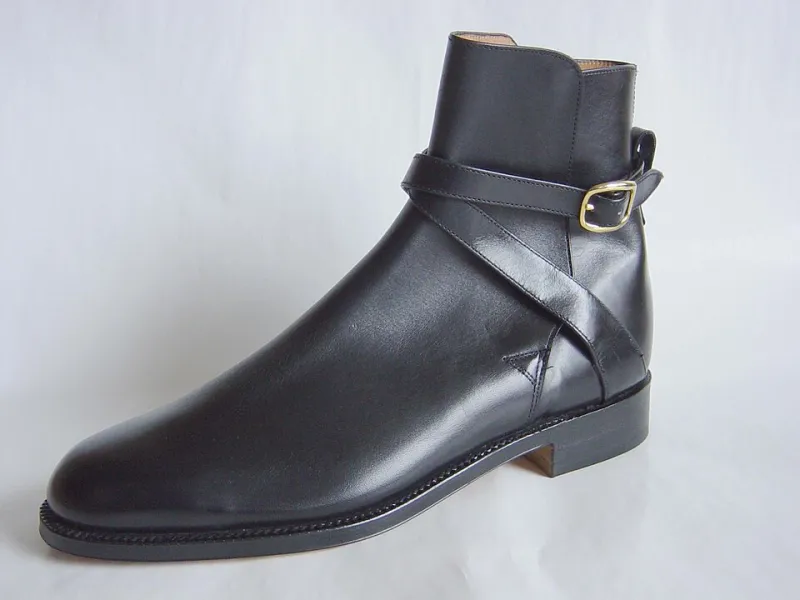
A Boot That Learns to Walk Beside You: Refitting the Feet You Have Now
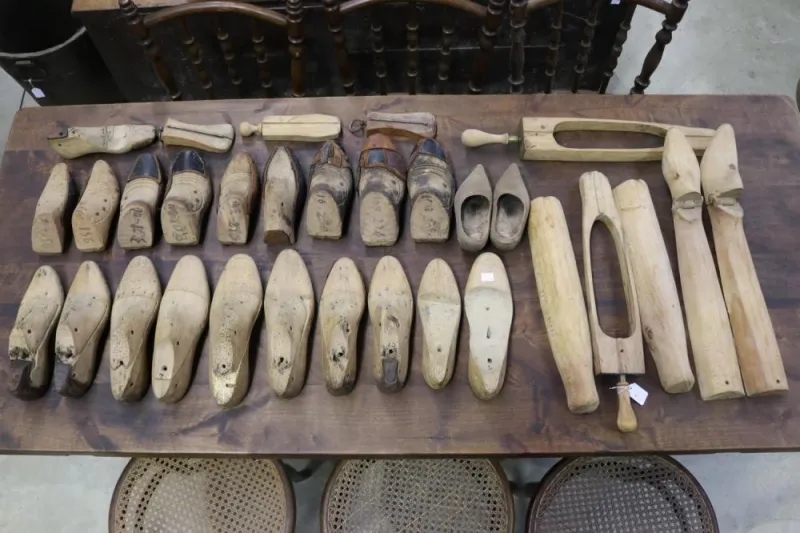
Photo: bootmaker wooden shoe lasts workshop bench craftsman, via image.invaluable.com
There is a comfortable fiction at the heart of most footwear purchases: that the foot you bring to the shop today is the foot you will have forever. Anyone who has reached middle age knows otherwise. Feet spread. Arches fall. Joints stiffen after winters of hard use. A boot bought at thirty may be quietly unwearable at fifty-five — unless it was built to change.
The Living, Shifting Foot
Podiatrists estimate that the majority of people experience measurable changes in foot dimensions several times across adulthood. Weight gain and loss alters pressure distribution and can widen the forefoot. Pregnancy relaxes ligaments and can add a full shoe size. A decade behind a desk produces different demands from a decade on scaffolding. Even something as ordinary as a long-haul flight reveals how feet swell through the day.
For the wearer of mass-produced footwear, these changes mean repeated replacement. For the owner of a bespoke Chelsea boot, they present a different question: what does a bootmaker owe a foot that will not hold still?
The Last as a Document, Not a Snapshot
Every bespoke pair begins with a last — the wooden form around which the boot is shaped. In a well-run atelier, that last is not discarded once the boots are delivered. It is labelled, archived and kept, because it is understood to be a living record rather than a finished artefact.
When a customer returns after ten years and reports that the right boot has grown snug across the instep, the bootmaker does not start again. The original last is retrieved, measured against a fresh set of readings, and modified. Wood is shaved or built up. A new trial fitting may be cut. The customer's boots are returned to the bench, the seams opened, the stiffeners replaced where necessary, and the pair re-closed over the revised form.
This is the quiet genius of buying well once: the boot is not a sealed object but a system, and systems can be updated.
What Can Actually Be Changed
It is worth being clear-eyed about the limits. Leather has memory, but it is not infinitely cooperative. A skilled maker can typically:
- Stretch the forefoot modestly, particularly in the ball area, using the original last and controlled moisture.
- Rebuild the sole and heel stack, which in turn changes underfoot feel and pitch considerably.
- Adjust the elastic gusset, replacing it with a panel of different tension or length as the ankle's requirements change.
- Re-cut the top line to accommodate a higher instep or altered bone structure.
- Commission a revised last where changes are significant — the honest answer when a foot has changed more than an alteration can absorb.
What cannot usually be done is dramatic: a narrow boot cannot become genuinely wide, and a low-cut design cannot grow tall. This is why the initial fitting matters so much — the bootmaker is not fitting the foot of today but anticipating the foot of the next twenty years.
Buying for Every Version of You
The phrase 'buy it once' is often used carelessly. A more accurate promise, and one worth demanding from any maker, is this: buy it for every version of yourself. Ask pointed questions before you commission. Will the lasts be stored? Is refitting a service offered, and at what cost? Can the boots be returned to the bench for rebuilding, and will the original patterns be kept?
A maker who answers readily is offering more than footwear. They are offering a relationship with your own two feet — one that expects change, plans for it, and refuses to let a pair of exceptional boots be retired merely because life did what life does.