Beyond the Size Chart: How Shaft Height, Heel Pitch, and Toe Box Shape Define a Truly Comfortable Chelsea Boot
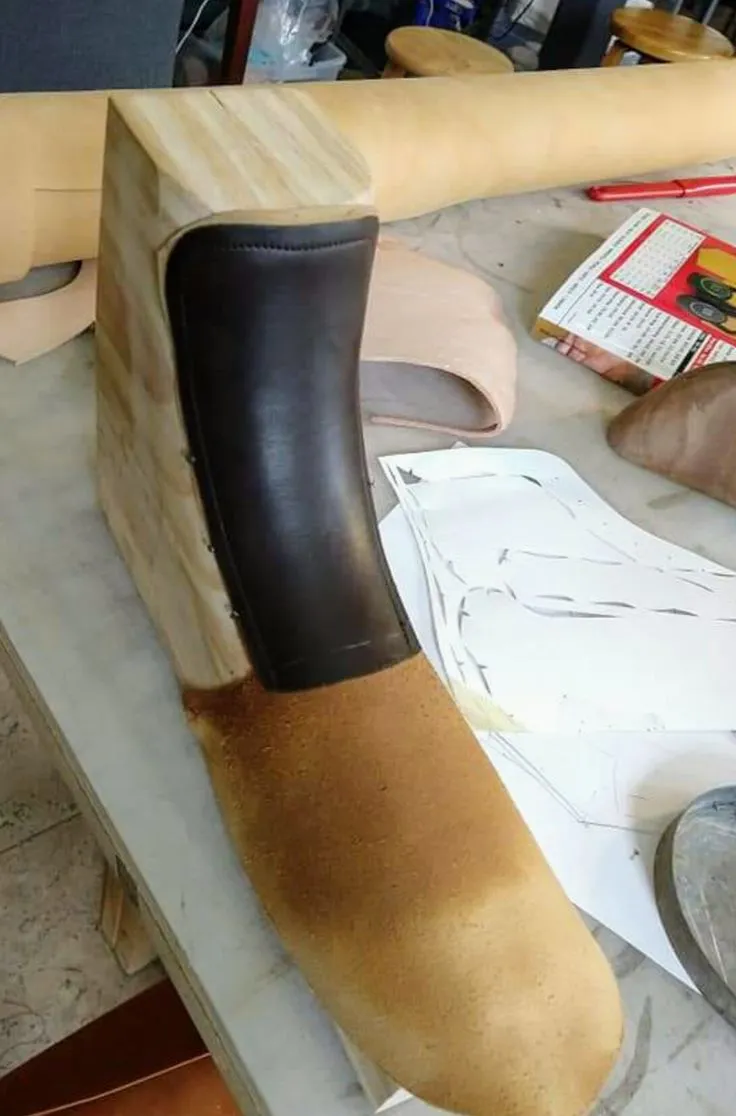
Photo: handcrafted leather Chelsea boot last shoemaking workshop measurement, via i.pinimg.com
There is a persistent misconception in footwear retail, one that has led many an otherwise discerning buyer astray: the belief that size is the primary determinant of comfort. Ask any experienced last-maker or bespoke cordwainer, and they will tell you otherwise. A Chelsea boot that carries the correct numerical size may still pinch, fatigue, or misalign the foot entirely — not because of the number stamped inside the heel, but because of the geometry that governs every other dimension of the construction.
At Chelsea Boots Maker, we have long maintained that true comfort is a structural matter. It emerges from the considered relationship between a boot's shaft height, its heel pitch, and the precise architecture of its toe box. These three elements, working in concert, determine whether a handcrafted Chelsea boot becomes a second skin or an enduring source of discomfort. This guide explores each in turn.
The Shaft: Proportion in Relation to the Leg
The shaft of a Chelsea boot — the cylindrical upper that rises above the ankle — is frequently overlooked in discussions of fit. Most buyers measure their foot; few consider how the shaft height interacts with their calf circumference, ankle bone placement, or the natural bend of their leg in motion.
A shaft that sits too high on a slender ankle creates a collar effect, restricting the Achilles tendon during walking and generating friction at precisely the point where the boot flexes most under load. Conversely, a shaft that terminates too low fails to provide the lateral ankle support that distinguishes a well-constructed Chelsea boot from a mere slip-on shoe. The ideal height — typically between 15 and 18 centimetres from the insole to the top of the back seam — should allow the ankle to articulate freely whilst maintaining a firm, supportive presence around the joint.
For those with a broader calf, the circumference of the shaft opening carries equal importance. An elasticated gusset that is either too taut or excessively generous will alter the boot's silhouette and, more critically, its structural behaviour around the ankle. A skilled maker will account for this variability in the pattern-cutting stage, adjusting the gusset tension to suit the wearer's specific measurements rather than an assumed average.
Heel Pitch: The Architecture Beneath Your Stride
Heel pitch — the angular elevation of the heel relative to the ball of the foot — is perhaps the most technically consequential dimension in the entire boot. It governs the distribution of body weight across the foot, influences posture from the ankle upward, and determines whether a boot can be worn comfortably for extended periods without muscular fatigue.
The standard heel pitch on a classic Chelsea boot falls between 18 and 22 millimetres. This modest elevation serves a specific biomechanical purpose: it shifts a portion of the wearer's weight forward, reducing pressure on the heel pad and encouraging a more fluid, rolling gait. For those who spend considerable time on their feet — whether navigating the cobbled streets of Edinburgh's Old Town or walking between appointments in the City of London — this pitch differential is not an aesthetic choice. It is a functional necessity.
Raise the pitch beyond 25 millimetres, and the boot begins to transfer excessive load onto the metatarsal heads, producing the forefoot fatigue commonly associated with fashion-forward heeled styles. Drop it below 15 millimetres, and the boot approaches a flat profile that, whilst fashionable in certain quarters, places the Achilles tendon under chronic low-grade strain over the course of a long day. The handcrafted boot sits deliberately within this range, calibrated to the wearer's height, weight distribution, and habitual gait.
It is worth noting that heel pitch interacts significantly with the stiffness of the shank — the steel or leather reinforcement running beneath the arch. A well-tensioned shank, properly fitted to the natural curve of the foot, works in tandem with the heel pitch to create a supportive platform that neither collapses under load nor resists the foot's natural flexion. This is one of the reasons that handcrafted construction, where the shank is fitted individually to each last, consistently outperforms mass-produced alternatives in long-term wearability.
Toe Box Geometry: Space, Shape, and the Anatomy of the Foot
The toe box is where the greatest misunderstanding of fit tends to concentrate. Buyers often assess it by pressing a thumb against the leather above the longest toe — a method that reveals little about the three-dimensional space within. What matters is not merely length, but volume: the internal height of the toe box, the width across the metatarsal heads, and the taper or roundness of the silhouette as it approaches the tip.
The Chelsea boot traditionally presents in several toe profiles, from the squared chisel last favoured in the 1960s revival to the almond-shaped last that has dominated British bespoke shoemaking for generations. Each profile creates a different internal geometry, and each suits a different foot shape. A broad, low-arched foot that spreads under weight will be poorly served by a sharply tapered toe box, regardless of the size on the label. The leather may accommodate the foot at rest but will compress the smaller toes during the push-off phase of walking, generating the kind of chronic discomfort that accumulates imperceptibly over hours.
Internal toe box height — the vertical clearance between the dorsum of the foot and the leather above it — is equally significant and rarely discussed in retail settings. A box that sits close to the top of the foot restricts the small but essential movements of the toes during the gait cycle, contributing to nail pressure, corns, and a generalised sense of constriction that no amount of breaking-in will resolve. A skilled last-maker will build sufficient clearance into the design without compromising the boot's exterior profile — a balance that requires both technical knowledge and an understanding of how leather behaves under repeated stress.
Reading Your Own Geometry
For those approaching the purchase of a handcrafted Chelsea boot with genuine seriousness, the most useful exercise is to understand one's own foot geometry before engaging with any maker or retailer. This means knowing not just the length and width of the foot, but the height of the instep, the position of the widest point across the metatarsals, and the degree to which the foot spreads under body weight.
A reputable bespoke service will take all of these measurements as a matter of course, using them to construct or select a last that mirrors the foot's natural architecture rather than approximating it. Ready-to-wear buyers, meanwhile, are best served by seeking out brands that offer multiple width fittings and a range of last shapes, rather than treating a single standard last as universally applicable.
The Chelsea boot, at its finest, is a study in considered proportion. Its clean silhouette, unbroken by laces or buckles, places the entire burden of fit and comfort on the geometry of its construction. Understanding that geometry — and insisting upon it — is what separates a boot worn for a season from one worn for a lifetime.