Sole Allegiance: When to Choose a Chelsea Boot Over an Oxford Shoe in the Modern British Wardrobe

Photo: Elmirtin, CC BY-SA 4.0, via Wikimedia Commons
There is a particular kind of indecision that visits the well-dressed Englishman on a Tuesday morning. He stands before his wardrobe, a finely pressed suit awaiting him, and faces a question that has quietly divided gentlemen for generations: does he reach for the polished Oxford or the sleek Chelsea boot? Both are unimpeachably British. Both speak to an appreciation of craft and tradition. Yet the choice between them carries meaning—social, professional, and deeply personal.
At Chelsea Boots Maker, we believe that understanding this distinction is not a matter of rigid rules but of cultivated awareness. The gentleman who grasps the nuances of each silhouette is the one who dresses with genuine authority.
The Oxford: Formality's Faithful Servant
The Oxford shoe, with its closed lacing system and low profile, has long occupied the apex of formal British dress. Its origins trace to the universities of Oxford and Cambridge, where understated refinement was, and remains, a virtue. In its purest form—a plain-toe or cap-toe construction in black calf leather—the Oxford communicates deference to occasion. It says, in the most eloquent terms, that the wearer understands the weight of ceremony.
For certain contexts, this quality is irreplaceable. Black-tie events, formal weddings at grand venues, and occasions requiring morning dress all call for the Oxford's disciplined silhouette. When the dress code is explicit and the setting unambiguous, the Oxford fulfils its purpose with quiet perfection.
Yet outside these ceremonial contexts, the Oxford's very strength becomes a limitation. Its formality can appear stiff in environments that reward a measure of personality. It offers little room for interpretation.
The Chelsea Boot: Versatility Worn With Confidence
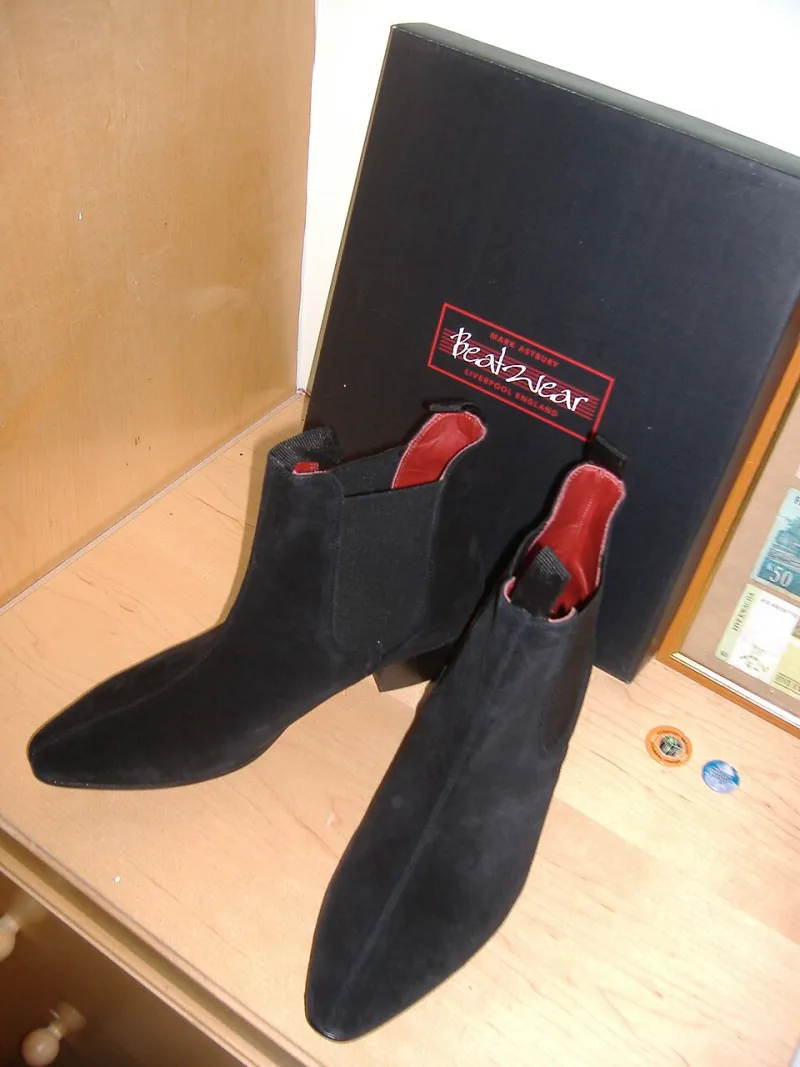
The Chelsea boot arrived in Victorian England as a practical riding boot, evolved through the boutiques of the King's Road in the 1960s, and has since established itself as one of the most adaptable silhouettes in British footwear. Its defining features—elastic side panels, a clean ankle line, and an absence of lacing—lend it an elegance that reads as effortless rather than studied.
A handcrafted Chelsea boot in dark tan or oxblood leather, constructed on a Goodyear-welted sole, occupies a fascinating middle ground. It is formal enough for a boardroom, relaxed enough for a countryside weekend, and distinctive enough for an opening night at the theatre. This range of expression is precisely what makes it the modern gentleman's most loyal companion.
Where the Oxford serves the occasion, the Chelsea boot serves the wearer.
Navigating Professional Contexts
In Britain's more traditional professional environments—the City of London, chambers of law, or long-established financial institutions—the Oxford has historically held dominance. There is a conservatism in these settings that rewards predictability in dress.
However, the landscape has shifted considerably. Across the creative industries, architecture, publishing, and the newer financial sectors, the Chelsea boot has become the footwear of the considered professional. Paired with a slim-cut wool suit in charcoal or navy, a well-made Chelsea boot in black or dark brown signals that its wearer takes both his work and his appearance seriously—without appearing to try too hard.
For those navigating both worlds, the solution lies in quality. A handcrafted Chelsea boot in a sleek, unadorned leather with a slim sole can hold its own in virtually any professional setting short of the most ceremonially formal. The craftsmanship communicates seriousness; the silhouette communicates modernity.
Social Occasions and the Question of Appropriateness
Weddings offer perhaps the clearest illustration of the divide. At a formal church wedding with a black-tie evening reception, the Oxford remains the more appropriate choice for those who wish to remain above reproach. Yet for a smart-casual country wedding, a garden ceremony, or an intimate civil celebration, a pair of beautifully constructed Chelsea boots in cognac or dark mahogany leather is not merely acceptable—it is, arguably, the more characterful option.
Restaurant dinners, gallery openings, theatre evenings, and private members' club gatherings are all occasions where the Chelsea boot thrives. It complements both tailored trousers and dark denim with equal ease, offering the kind of sartorial flexibility that a busy social calendar demands.
The Matter of Construction
Any meaningful comparison between these two silhouettes must acknowledge that quality of construction transcends the question of style. A poorly made Chelsea boot will always look inferior to a well-made Oxford, and vice versa. The discerning gentleman does not simply choose a style—he chooses a standard.
At Chelsea Boots Maker, every boot is constructed using traditional methods: hand-lasted uppers, Goodyear-welted soles, and full-grain leathers sourced from British tanneries. This commitment to craft ensures that a Chelsea boot carries the same authority as the finest Oxford—not through imitation, but through the same foundational values of quality and longevity.
Where True Loyalty Lies
Perhaps the gentleman's dilemma is less a dilemma than it first appears. The Oxford and the Chelsea boot are not rivals but complements—two instruments in a well-composed wardrobe, each suited to its own register.
If pressed to name the more versatile of the two, the Chelsea boot earns that distinction without hesitation. It navigates more contexts, accommodates more moods, and allows more of the wearer's character to emerge. For a man who values both tradition and adaptability, a handcrafted Chelsea boot is not a compromise between formality and ease. It is the point at which those two qualities meet most gracefully.
The Oxford will always have its place. But the Chelsea boot, crafted with genuine care and worn with considered intention, has earned a loyalty all of its own.