From Stiff to Sublime: The Cobbler's Guide to Conditioning Your Chelsea Boots
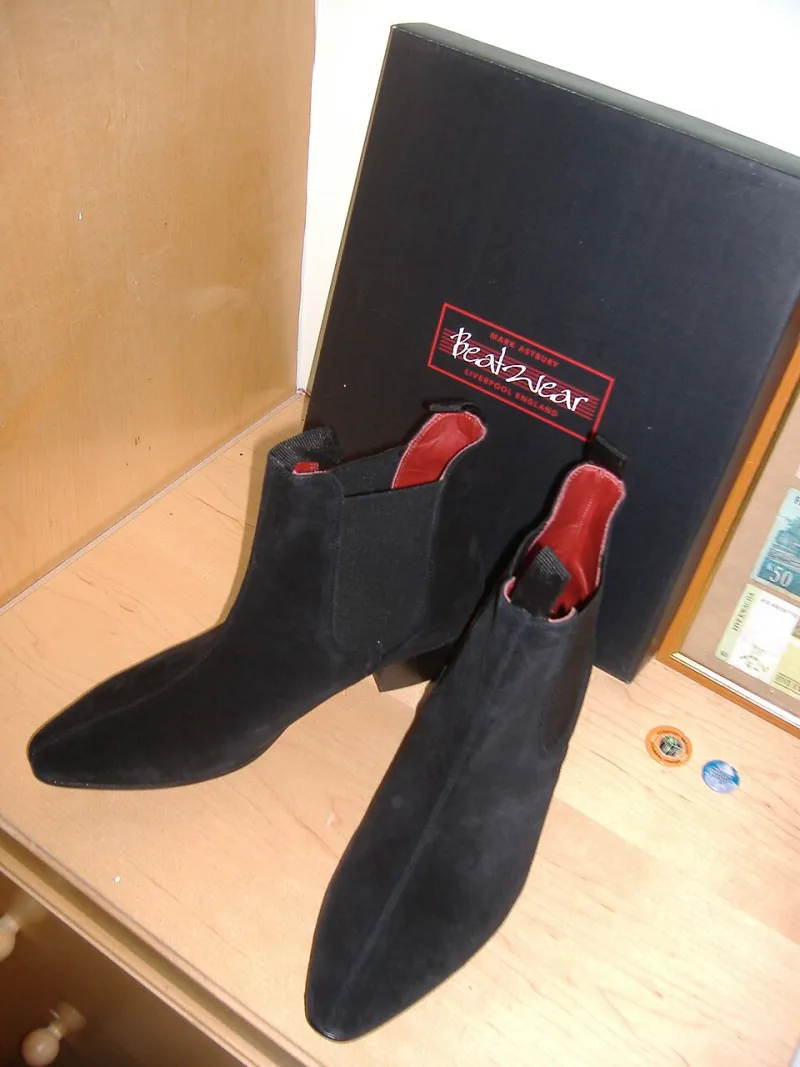
Photo: Paul Dennis from Leighton Buzzard, United Kingdom, CC BY-SA 2.0, via Wikimedia Commons
There is a moment that every owner of a genuinely well-made pair of Chelsea boots will recognise: the slight resistance at the ankle as you pull them on for the first time, the firmness underfoot, and the sense that the leather is, in some quiet way, assessing you just as thoroughly as you are assessing it. This is not a flaw. It is, in fact, the very signature of quality.
Handcrafted leather boots are not passive objects. They are, in the truest sense, materials in conversation with the wearer — and the early weeks of that conversation require careful management. Rush the process, and you risk creasing in the wrong places, discomfort that discourages wear, and leather that never quite settles into the shape it was always meant to take. Approach it with the measured patience of a craftsman, however, and what awaits you is a boot that fits with the precision of something made for you alone.
Understanding Why Leather Behaves the Way It Does
Full-grain and vegetable-tanned leathers — the materials favoured by heritage British bootmakers — are dense, fibrous, and initially unyielding. Unlike synthetic alternatives, they contain natural oils and cellular structures that respond to heat, moisture, and pressure over time. When you walk, your foot generates warmth. That warmth, combined with the gentle pressure of your gait, gradually encourages the leather fibres to relax and reorient themselves around the precise contours of your foot.
This is why two people wearing the same boot in the same size will, after six months of regular wear, possess what amount to two entirely different pairs. Your arch, the breadth of your forefoot, the way your heel strikes the ground — all of these leave their mark. The boot learns you.
Climate plays a meaningful role in this process as well. In the damp British autumn and winter, leather absorbs atmospheric moisture and softens more readily. In drier conditions — a centrally heated office, a summer heatwave — the fibres tighten. Neither extreme is ideal during the breaking-in period, which is why conditioning becomes so important.
The Conditioning Schedule: A Heritage Approach
British cobblers of previous generations were not without their rituals, and chief among them was the application of a quality leather conditioner before a new pair of boots ever touched a pavement. This pre-wear conditioning is still among the most effective things you can do.
Before your first outing, apply a thin, even layer of a natural-based leather conditioner — one containing beeswax, lanolin, or neatsfoot oil — to the entire upper surface of the boot. Allow it to absorb fully, ideally overnight, before buffing lightly with a soft cloth. This initial treatment replenishes any oils lost during the tanning and finishing process, reduces the rigidity of the leather, and creates a degree of surface protection against the elements.
For the first four to six weeks of wear, a conditioning treatment every ten to fourteen days is advisable. After that, a monthly schedule through winter and a bi-monthly one in drier months will maintain suppleness without over-saturating the leather, which can weaken the fibres over time. Less is more: a thin, consistent application will always outperform an occasional heavy-handed one.
Shoe Trees: Not an Afterthought
Perhaps no single accessory contributes more to the longevity and fit of a handcrafted Chelsea boot than a properly fitted shoe tree. Cedar trees — preferably English or Eastern European cedar — serve two essential functions: they draw moisture from the leather after wear, and they maintain the boot's shape during rest, counteracting the natural tendency of the upper to collapse and crease.
For Chelsea boots specifically, which rely on the elastic side panels to hold their structure, a shoe tree that fills the toe box and mid-foot without overstretching the elastic is essential. A tree that is too large will stress the gussets; one that is too small will fail to prevent toe-box creasing. When in doubt, consult your bootmaker for a recommendation tailored to your specific last.
Insert your trees promptly after removing the boots — ideally within thirty minutes — while the leather is still slightly warm and receptive. This is when the cedar does its finest work.
Realistic Timelines and Wearing Strategies
Patience is not merely a virtue in this context; it is a practical necessity. A well-constructed pair of Chelsea boots, built on a traditional last with a leather insole and Goodyear-welted construction, will typically require between four and eight weeks of regular wear before they begin to feel truly settled. For boots with a leather insole — which moulds to the foot far more precisely than synthetic alternatives — the process may extend to three months before the full benefit is felt.
The most effective approach during this period is graduated wear. Begin with sessions of two to three hours, ideally on days when you will be walking at a moderate pace rather than standing for long periods or covering significant distances. Increase the duration incrementally across the first fortnight. This allows the leather to flex and warm without subjecting it — or your feet — to undue stress.
If you experience tightness across the toe box or at the ankle, a professional boot stretcher applied by a cobbler for twenty-four to forty-eight hours can ease specific pressure points without compromising the boot's structure. Avoid the temptation of DIY stretching sprays, which can alter the surface finish of fine leather unpredictably.
The Gait Factor: Why No Two Break-Ins Are Identical
It is worth acknowledging that your manner of walking will influence where and how your boots develop character. Those who pronate — rolling the foot inward — will find that the inner edge of the sole wears more quickly and that the upper creases at a slightly different angle than it would for a supinator. A longer stride creates different flex points across the vamp than a shorter, more upright gait.
This is not something to correct or resist. It is, rather, the mechanism by which a handcrafted boot becomes uniquely yours. However, it does underscore the importance of regular sole inspections. Uneven heel wear, left unaddressed, places asymmetric strain on the welt and upper. A cobbler can replace a worn heel tip for a modest sum and, in doing so, preserve the integrity of the entire boot for years to come.
The Reward at the End of the Process
Those who have worn a pair of properly conditioned, carefully broken-in Chelsea boots for a year or more will attest to something that is difficult to quantify but impossible to ignore: the sense that the boot has become an extension of the foot itself. The leather, now softened and shaped precisely to your contours, offers a kind of support and comfort that no new pair — however expensive — can replicate immediately.
This is the promise at the heart of handcrafted heritage footwear. It is not comfort delivered instantly, but comfort earned through a process of mutual adaptation between maker, material, and wearer. Observe that process with care, and your Chelsea boots will not merely fit you. They will remember you.