The Considered Collection: A Connoisseur's Guide to Building a Lifetime Wardrobe of Handcrafted Chelsea Boots
There is a particular satisfaction that belongs exclusively to the long-term thinker. It is not the fleeting pleasure of an impulse purchase, nor the hollow novelty of a seasonal trend. It is, rather, the quiet and accumulating reward of building something that grows more valuable — more personal, more coherent — with every deliberate addition. For those who have come to appreciate the handcrafted Chelsea boot not merely as footwear but as an expression of character and taste, the act of collecting becomes a discipline in its own right.
This guide is written for that reader: the individual who has already discovered the transformative quality of a well-made boot and now wishes to approach the wardrobe with the same precision and patience that goes into crafting one.
Begin with a Philosophy, Not a List
The most common mistake a new collector makes is to begin with quantity rather than intention. A wardrobe of twelve boots assembled without coherence will serve you less well than four pairs chosen with genuine deliberation. Before acquiring anything further, it is worth asking a foundational question: what do I actually need my boots to do?
Consider the full range of your life — the professional obligations, the social occasions, the country weekends, the city commutes through autumn rain. A truly functional collection does not merely accumulate variety; it fills gaps. Each new acquisition should answer a specific call that the existing wardrobe cannot.
With that principle established, the collector is far better positioned to make choices that endure.
The Architecture of a Core Collection
If one were to design a Chelsea boot collection from the ground up, the most logical foundation would rest on three distinct pillars: formal, transitional, and casual.
The formal anchor — a pair in black calf leather, ideally with a sleek, unadorned profile and a leather sole — is the indispensable starting point. Black Chelsea boots occupy a unique position in the British wardrobe: they are equally at home in a boardroom, at a funeral, or beneath a well-cut dinner suit. Their utility is so broad that no collection is truly complete without them.
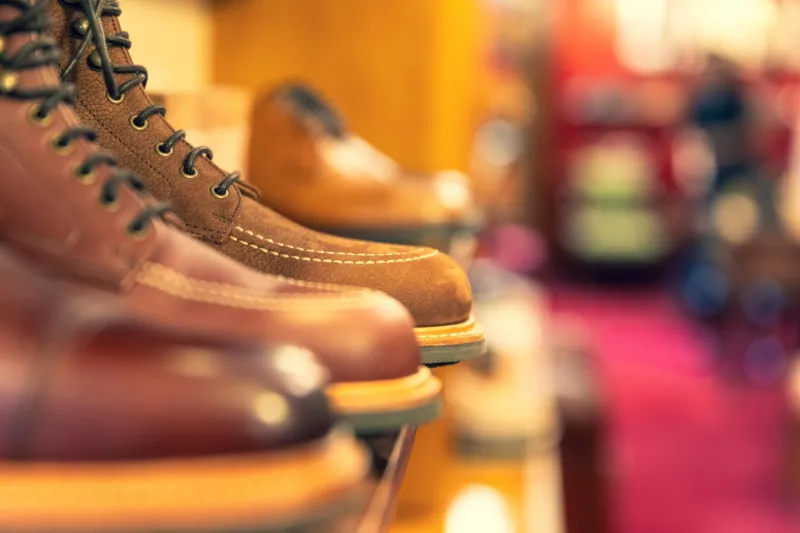
The transitional workhorse — here, dark tan or conker brown in full-grain leather becomes the collector's most versatile ally. Brown, in its many expressions, pairs with navy, grey, olive, and camel in ways that black simply cannot. A rich chestnut boot bridges the gap between the formal and the relaxed with considerable elegance, and it is often the pair that accumulates the most wear.
The character piece — this is where the collection begins to acquire a personality. Burgundy, oxblood, or a deep forest suede introduces tonal depth and individual expression. Burgundy, in particular, has long been a favourite of the British dresser for its ability to complement navy suits and grey flannels without demanding attention. It is a colour of quiet distinction.
Expanding the Collection: Complementary Pairings and Seasonal Logic
Once the core three are in place, subsequent acquisitions can be guided by the logic of complementarity — the idea that each new boot should either extend the collection's range or deepen its versatility.
A mid-tan suede Chelsea boot, for instance, offers something that polished calf cannot: texture and informality. Worn with denim, moleskin trousers, or a heavy tweed, it communicates a relaxed confidence that is very much in keeping with the British country aesthetic. However, suede demands its own care rituals and is less forgiving in wet weather, which makes it a considered rather than a primary choice.
For those who dress frequently in lighter tones — stone chinos, cream linen, pale grey — a cognac or honey-coloured boot in a vegetable-tanned leather can prove revelatory. These warmer, lighter shades are underrepresented in most collections and offer a freshness during the spring and early summer months that darker boots simply cannot provide.
Navy and slate blue leathers, while less conventional, deserve mention for the collector who dresses with genuine individualism. These tones work particularly well against grey and charcoal tailoring and represent the kind of bespoke territory where Chelsea Boots Maker's atelier truly excels.
The Question of Last and Silhouette
A sophisticated collection is not solely a matter of colour and leather. Silhouette plays an equally important role. A narrow, elongated last conveys a different sensibility to a rounded, more robust profile — and both have their place depending on the trouser cut and occasion.
The collector who wears slim-cut trousers or suits will benefit from a sleeker last, whilst those who favour wider, more traditional cuts may find a slightly fuller toe more proportionate. It is worth considering, when commissioning or selecting each new pair, whether the silhouette adds something genuinely distinct to the existing collection or merely duplicates what is already present.
Storage, Rotation, and the Long View
A collection of handcrafted boots is only as good as the care that sustains it. Leather, when properly maintained, does not merely survive — it improves. But improper storage and neglect will diminish even the finest pair within a few seasons.
Shoe trees — cedar, ideally — should be considered non-negotiable. They preserve the shape of the boot, absorb moisture from the interior, and prevent the creasing that, left unchecked, can become permanent. Every pair in the collection deserves its own set.
Rotation is equally important. No single pair of boots should be worn on consecutive days. Leather requires time to breathe and recover, and a collection that is rotated thoughtfully will see each pair lasting considerably longer than one that is relied upon too heavily. This is, in fact, one of the practical arguments for building a collection in the first place: the more pairs you own, the longer each individual pair will last.
Storage should be cool, dry, and away from direct light. Dust bags, provided by reputable makers, are worth using consistently. For suede boots, a dedicated suede brush and protector spray should be applied at the start of each season.
Conditioning schedules will vary by leather type. Calf and full-grain leathers benefit from a high-quality wax or cream applied every four to six weeks during regular wear, whilst more exotic finishes — cordovan, pebble grain, pull-up leather — will have their own requirements. When in doubt, consult the maker.
Viewing the Collection as Investment
The language of investment is often applied loosely to luxury goods, but in the case of handcrafted Chelsea boots, it holds genuine weight. A well-maintained boot from a reputable maker will not depreciate in the manner of a fast-fashion purchase. It will, over time, acquire a patina and a character that cannot be replicated by any new pair — and that patina is, in the truest sense, irreplaceable.
The collector who approaches their wardrobe with this understanding will make very different decisions to one who is merely shopping. They will choose quality over novelty, coherence over abundance, and longevity over trend. They will commission bespoke where the standard range does not quite suffice. They will repair rather than replace. And they will, over the years, find themselves in possession of something genuinely rare: a collection that tells the story of a life lived with care and discernment.
That, ultimately, is what handcrafted footwear is for.