One Boot, Many Lives: Styling Your Chelsea Boots Through Every Shift in Taste and Circumstance
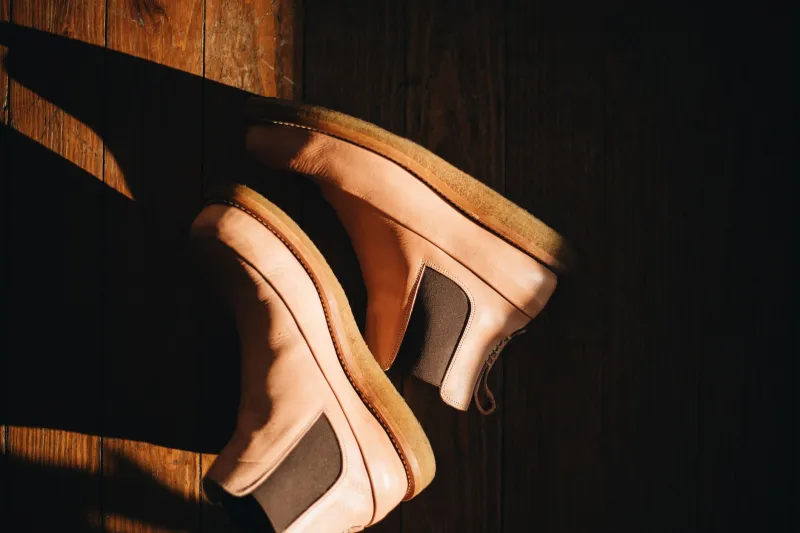
There is a particular kind of confidence that comes with wearing a boot you know intimately. Not the brash confidence of novelty, but the settled assurance of something proven — leather that has softened precisely to the contours of your foot, a silhouette that has accompanied you through enough chapters to feel almost biographical. For those who invest in handcrafted Chelsea boots of genuine quality, this relationship is not merely sentimental. It is practical. The question, then, is not whether your finest pair will endure, but whether your approach to wearing them will keep pace with who you are becoming.
Personal style does not stand still. Careers shift. Cities change. Social contexts multiply. The man who once wore his dark tan Oxblood Chelseabootsmaker pair with slim-cut trousers and a leather jacket in his late twenties may find himself, a decade on, navigating board meetings, country weekends, and gallery openings within the same fortnight. The boots, if chosen well, remain equal to every occasion. The styling, however, must evolve with intention.
Colour as a Constant — and a Variable
One of the most reliable anchors in any wardrobe transition is an understanding of how your boot's colour functions across different aesthetic registers. A mid-tan or cognac Chelsea boot, for instance, occupies an enviable position in the British palette: warm enough to complement autumnal tweeds and earthy woollens, yet sufficiently refined to sit alongside charcoal suiting or navy separates.
As your wardrobe matures — perhaps moving away from the monochrome minimalism of early professional life towards a richer, more layered sensibility — the same boot can be re-contextualised simply by shifting the tones around it. Introduce a caramel-coloured leather belt, a mustard pocket square, or a camel overcoat, and a boot you have owned for years suddenly reads as the considered centrepiece of an entirely fresh ensemble. The boot has not changed. Your eye for colour has deepened.
For those whose style has moved in the opposite direction — towards greater restraint and formality — a dark burgundy or black Chelsea boot offers similar versatility in reverse. Stripped of casual companions and paired instead with pressed wool trousers and a well-cut single-breasted jacket, the same boot that once anchored a relaxed Friday aesthetic becomes an instrument of quiet authority.
Fabric Pairings and the Texture Conversation
British dressing, perhaps more than any other sartorial tradition, prizes texture. The interplay between materials — rough and smooth, matte and lustrous, structured and yielding — is where a great deal of the country's most distinctive style is conducted. Your Chelsea boots, as a constant in this conversation, become a fixed point around which seasonal and stylistic experiments can orbit.
In the earlier stages of a sartorial journey, many wearers default to denim or cotton drill as the natural companion to a Chelsea boot. These are reliable partnerships, and there is no reason to abandon them entirely. However, as taste matures, the introduction of flannel trousers, cavalry twill, moleskin, or even lightweight wool crepe opens entirely new dimensions of dialogue between boot and garment. The smooth, taut surface of a well-polished calf leather Chelsea boot against the napped finish of a flannel trouser leg is one of the quietly satisfying combinations available to the British dresser — understated, considered, and unmistakably deliberate.
Knitwear, too, offers rich territory. A chunky Aran jumper worn with slim-cut trousers and a dark leather Chelsea boot carries the same internally coherent logic as a tailored tweed jacket with brogued detailing — both conversations between craft, texture, and British heritage.
Seasonal Rotation Without Seasonal Replacement
One of the most common misconceptions among those new to investing in quality footwear is that different seasons demand entirely different boots. In truth, a well-constructed Chelsea boot — one built on a Goodyear-welted sole with full-grain leather uppers — is capable of serving across all four British seasons with appropriate care and considered styling.
The key lies not in replacing the boot but in rotating its context. In spring and early summer, lighter-weight trousers in linen or cotton allow the boot to breathe visually, preventing the silhouette from appearing too heavy for the season. A rolled trouser hem — neither affected nor careless — can introduce a note of informality that suits the lighter months well. In autumn and winter, the same boot anchors heavier garments with ease: the weight of a wool overcoat finds its natural counterpart in the substantive presence of a leather Chelsea boot.
For those who own more than one pair — and many who begin with one pair of handcrafted Chelsea boots find themselves returning for a second — the practice of deliberate rotation extends the life of each pair considerably. Allowing leather to rest and recover between wearings, particularly during the damp months of the British winter, is among the most effective forms of long-term care.
Navigating Professional Transitions
Few moments test a wardrobe's adaptability more thoroughly than a shift in professional context. The creative sector worker who moves into a client-facing role, the entrepreneur who begins attending more formal industry events, or the professional who transitions towards a less structured working environment — each faces the same fundamental question: do my clothes still reflect who I am, and where I am going?
A handcrafted Chelsea boot, by its nature, occupies a position between the formal and the relaxed that few other styles can claim. It is this inherent versatility that makes it so valuable at moments of professional transition. Rather than abandoning a trusted pair in favour of something more obviously suited to a new context, the more elegant solution is to renegotiate the boot's surroundings. A Chelsea boot that once accompanied dark jeans and an open-collar shirt can, with minimal adjustment, accompany well-pressed trousers and a fine merino roll-neck — a combination that reads as contemporary professional without sacrificing personal authenticity.
The Confidence of Continuity
There is something worth naming in the experience of wearing the same pair of exceptional boots across many years and many versions of yourself. It is not nostalgia, exactly — it is something more forward-looking than that. The boot becomes a form of continuity in a life that is, by design, always changing. It carries the accumulated evidence of good judgment: the decision, made once, to invest in something built to last.
At Chelsea Boots Maker, this is precisely the philosophy that informs every pair we produce. Handcrafted with materials selected for longevity and character, constructed by artisans who understand that a boot must outlast trends and seasons alike, each pair is made not for a moment in your life but for the whole of it.
Your style will evolve. That is not a problem to be solved but a journey to be made well. The right boots, styled with growing confidence and increasing knowledge, will be equal to every step of it.